As I approached the three cottages strung in a row along the dirt vehicle track at around 1050 metres above sea level, 7 km into my run, my body’s yearning for caffeine took over my mind. Seeing a gospođa sitting on the porch of the first cottage, I thought wildly about going up to the fence and calling out to ask for a cup of coffee. Don’t be silly, I told myself, laughing inwardly but not entirely dismissing the idea. I would have felt comfortable enough asking for water. The problem was, my knowledge of Serbian extended to the word kafa (coffee) or even izvinite hoću kafa molim (Excuse me, I want coffee please), but nothing politer than that. Anyway, the idea was ridiculous and, regretfully, I dismissed it.
Rhythmically my feet went up and down, moving me inexorably forward past this tiny outpost of human habitation. Lacking the Serbian, to amuse myself and keep my mind occupied as the possibility of coffee moved behind me, I composed a very polite request for coffee in Italian — Scusi, potrei chiederla un grande piacere? Potrei chiederla un goccio di caffè? or, alternatively, Per caso, potrebbe darmi un goccio di caffè?
A violation of societal norms thus successfully averted, I continued up the track towards the most beautiful part of the route I had planned, the part that was pulling my spirit, and with it my body, onward.
I was taking it very easy today. In the training programme I’m following, Saturday is the day of the long run, which has become the great joy that I look forward to all week. Early I start looking at maps and planning where I will go — there is an enormous sense of freedom and possibility in being able to run wherever one wants in the mountains. Self-sufficient, self-reliant, self-propelled at (for me, still modest) speed.
All my life I have hiked, and increasingly the past years I had become frustrated with the limitations in time and distance with hiking, especially in the mountains where there is endless room to roam, and I wanted to roam it all. Over the decades I had dipped unsuccessfully into running as exercise, but last November suddenly, abruptly, it was right — with a difference. Running not as exercise but as propulsion to go further, faster, higher in the Alps. So I started endurance training specifically for mountain running.
The training had been going well, but this July Sunday, my body said no, we’re going neither far nor fast today. According to the calendar this was the midpoint in my monthly cycle, when ovulation occurs. I’m used to being hit hard by the surge of luteinizing hormone and estrogen, but it had been a long time since I had been hit this hard. Thursday I had felt ‘low’, and Friday I had been on the verge of a migraine and had slept for two or three hours in the afternoon and then almost twelve hours that night. Saturday morning I was still struggling and realised the long run was out of the question, but in mid-afternoon I went for an easy run and felt much better afterwards. Last night I had slept well enough. In a typical month, that would have been the end of it and after a slow start to the day, I would have been fine today. But not this month.
I wasn’t even sure I should be doing this run at all, but something within me had pulled me out the door and to the start of the route and got my feet moving. When I noticed how low my heart rate was in the early kilometres and how low I felt, I told myself that if I got a strong signal to stop and go back, I would. In the meantime, the force that was pulling me onward kept me lifting each foot and putting it down again, a little further on. I ran what felt very slowly, and when my feet stopped running I walked until they started running again. Taking it easy, easy; no stress, no pressure.
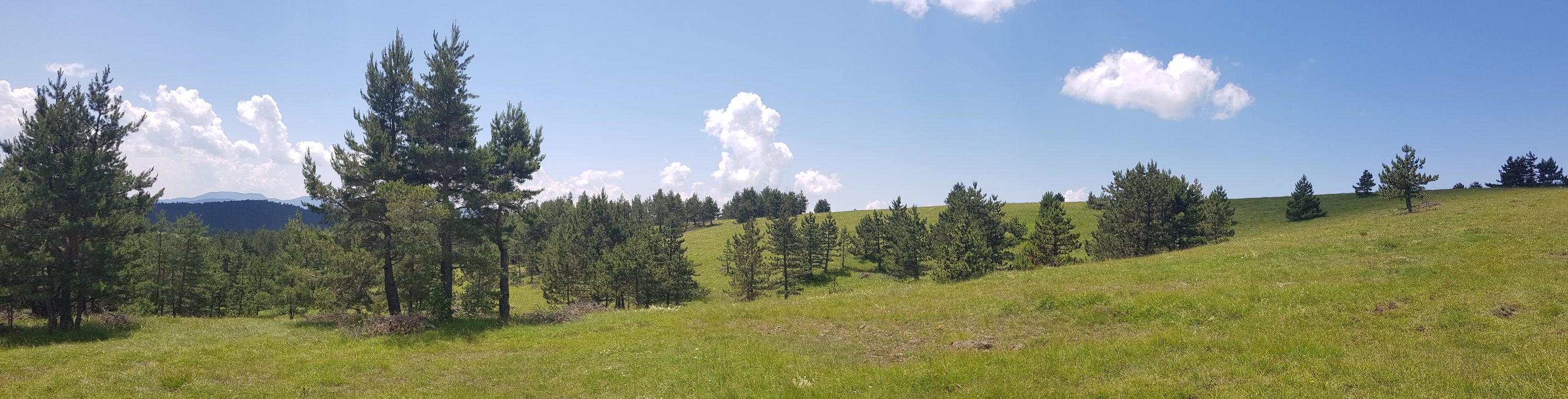
I knew the route I wanted to follow, so there were no decisions to make; at each dividing of the track I turned or kept on straight automatically. My mind was moving lazily, drifting, lingering on the scene from the previous Saturday’s run that was compulsively pulling me: a high meadow dotted with conifers, a sweeping view over valleys and mountain ranges, and the silence of the wind soughing through the pines amid the shirr-shirring of summertime insects.
After passing the cottages my way took me around to the right and up a short slope, along a bit and then down, then up another short slope and then steeply downhill. Arms flung out to the sides for balance, I concentrated on taking short quick steps while keeping my footing on the deeply rutted and stony surface.
The morning was fairly cool and overcast (thankfully), and as I neared the bottom of this short stretch my attention was arrested by the green meadow on my right. Speckled with wildflowers in pink, lavender, yellow and white, it was bounded by dense conifer forests. On the right, a stream flowed downward following the line of the forest, the whole scene shining with moist richness in the cool, grey air.
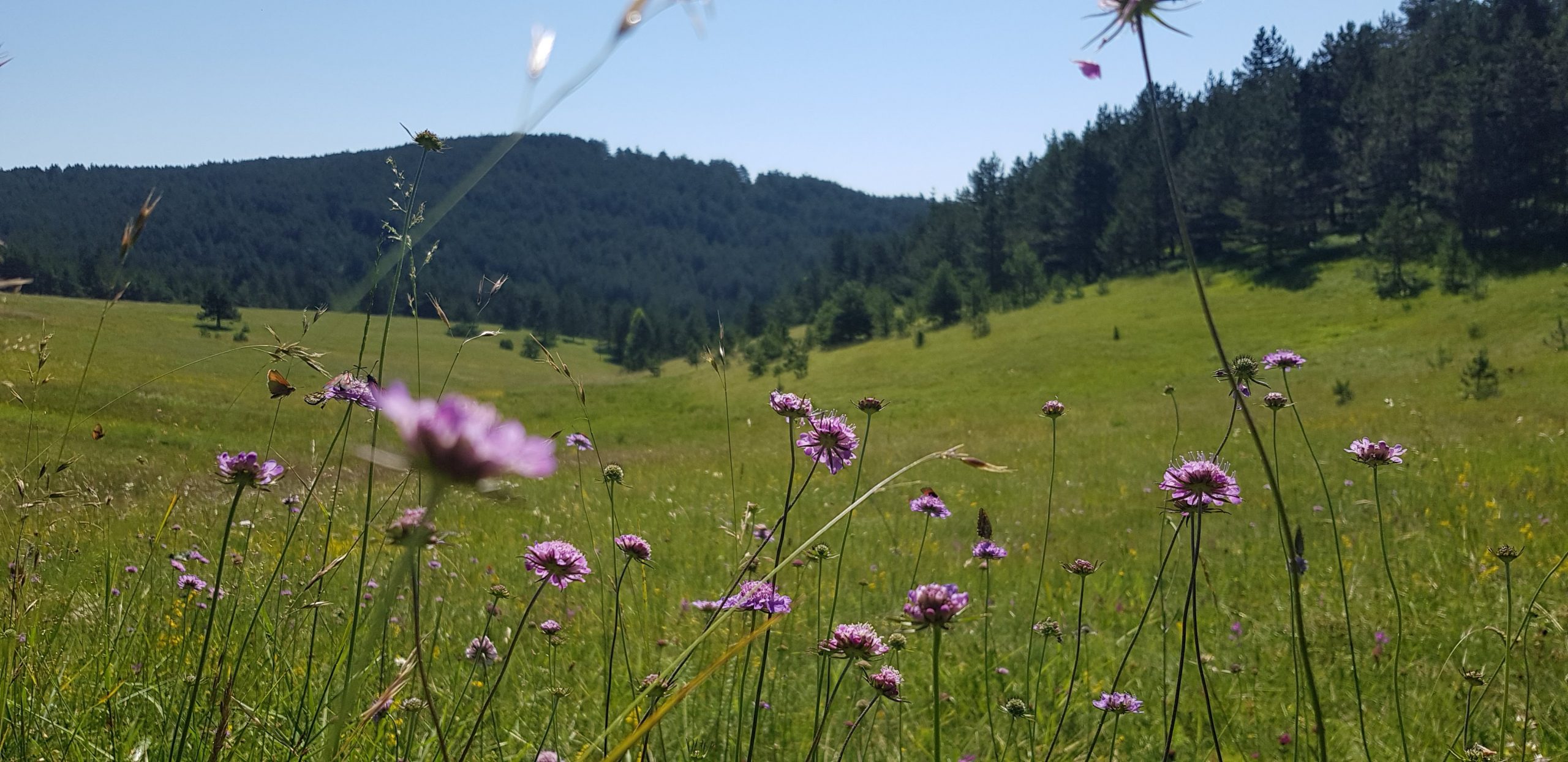
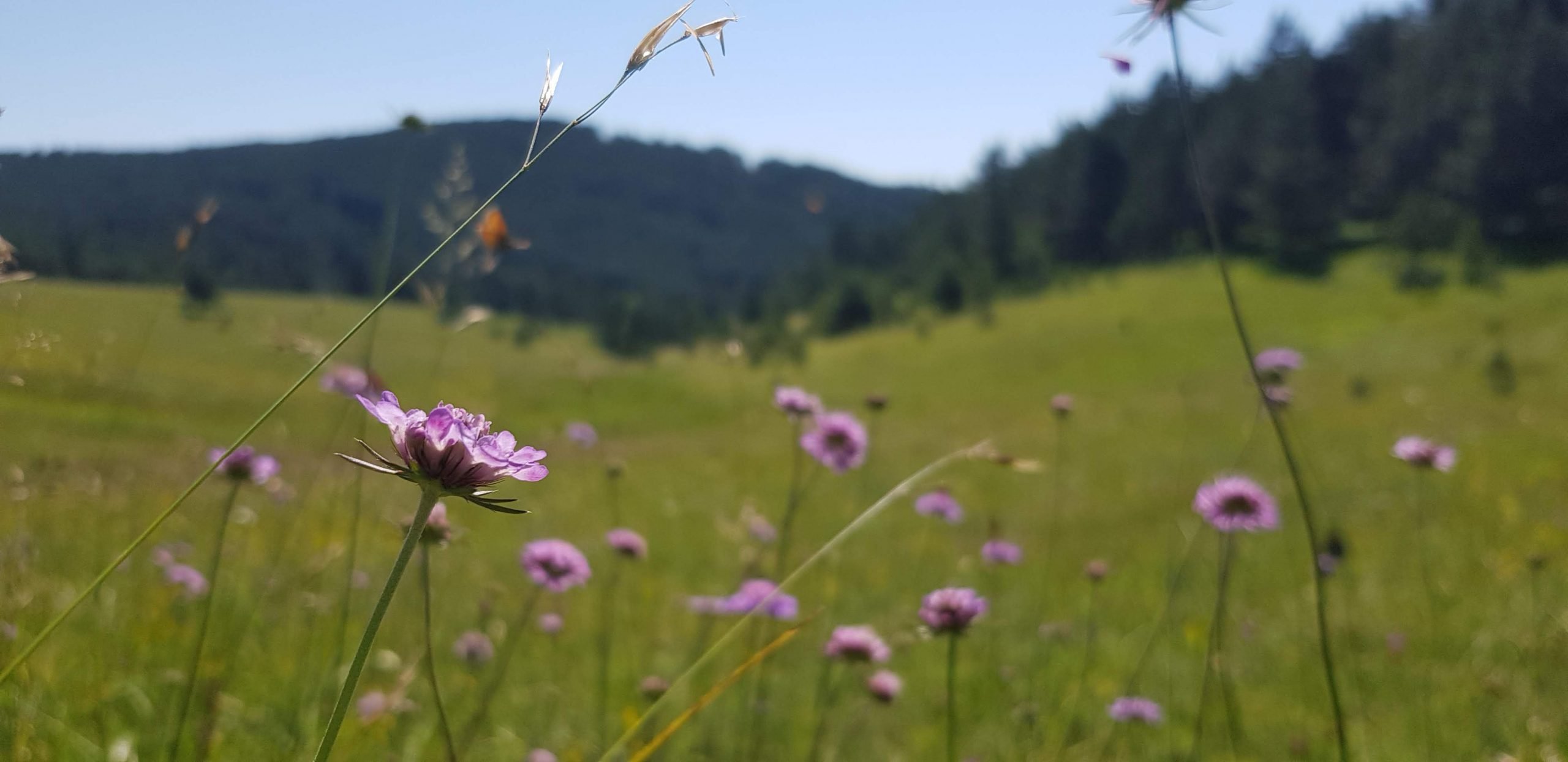
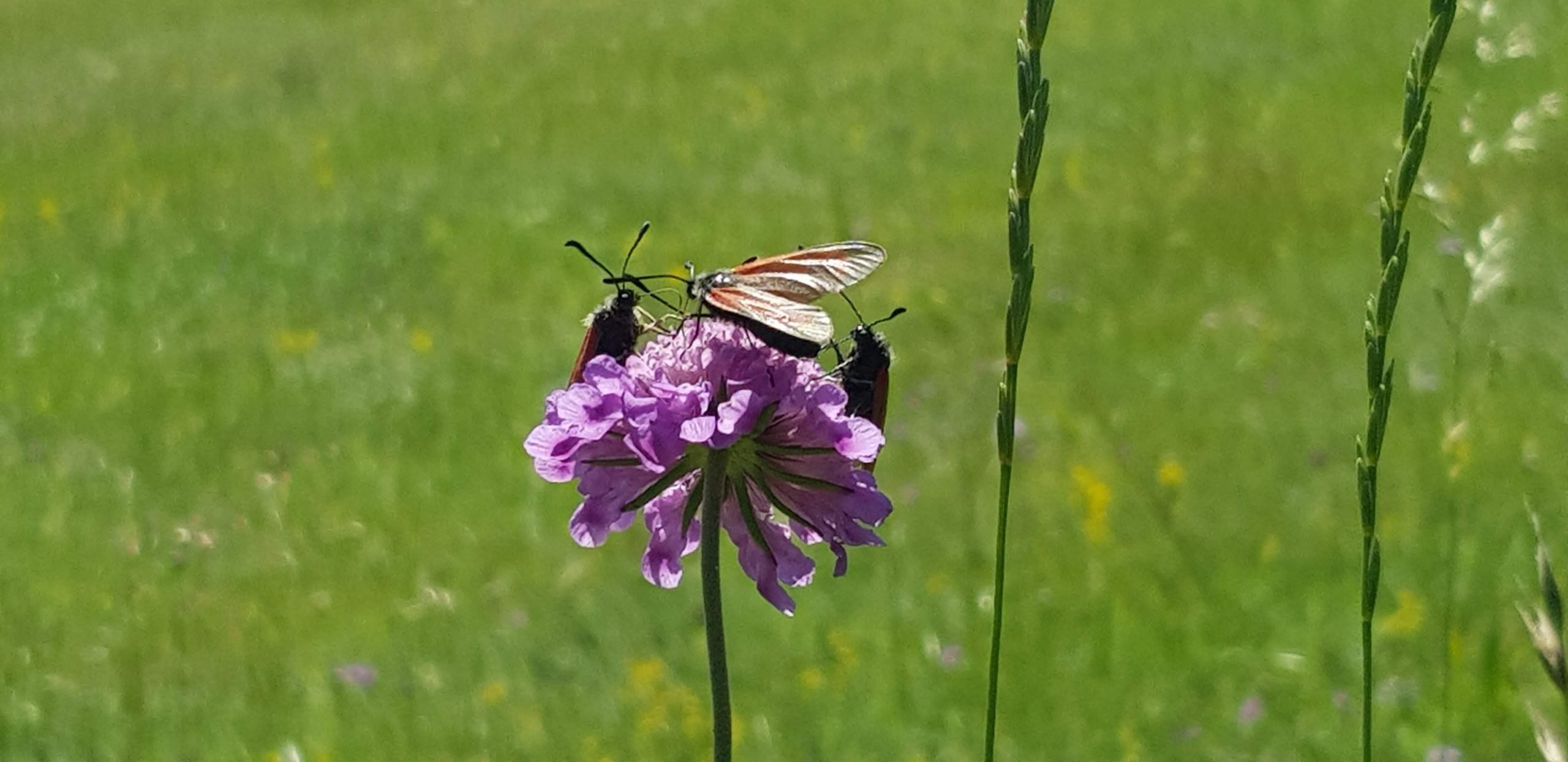
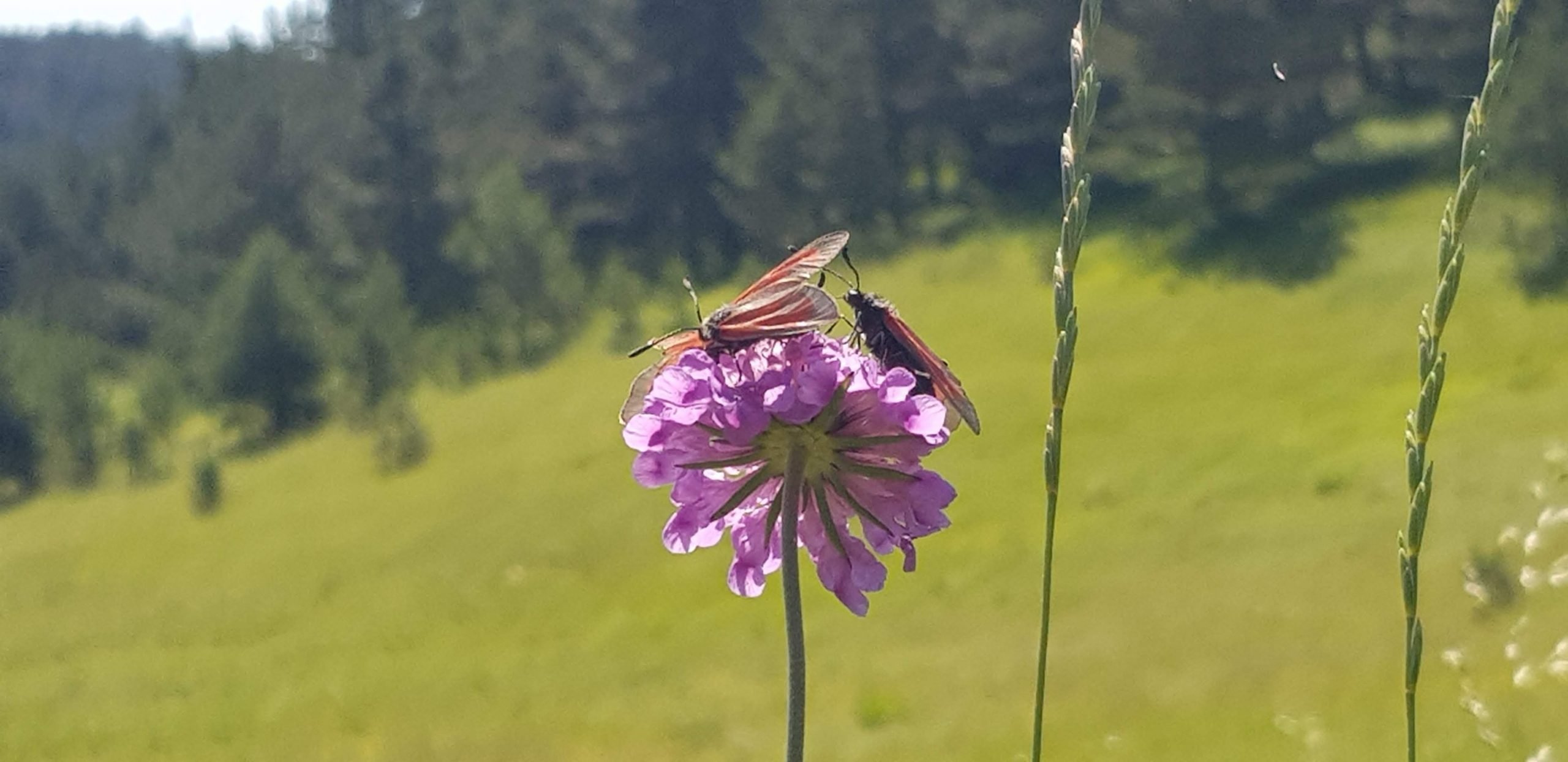
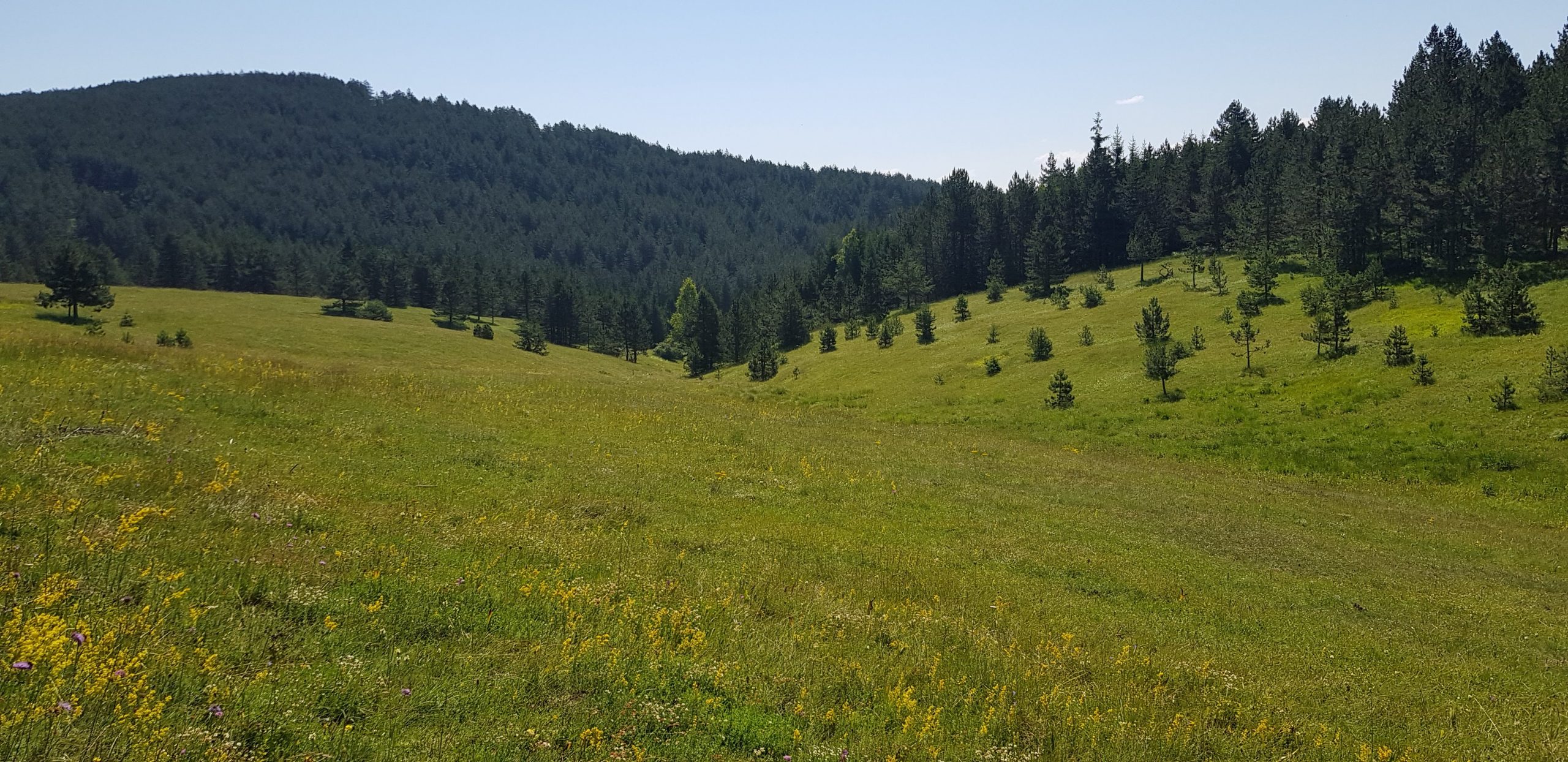
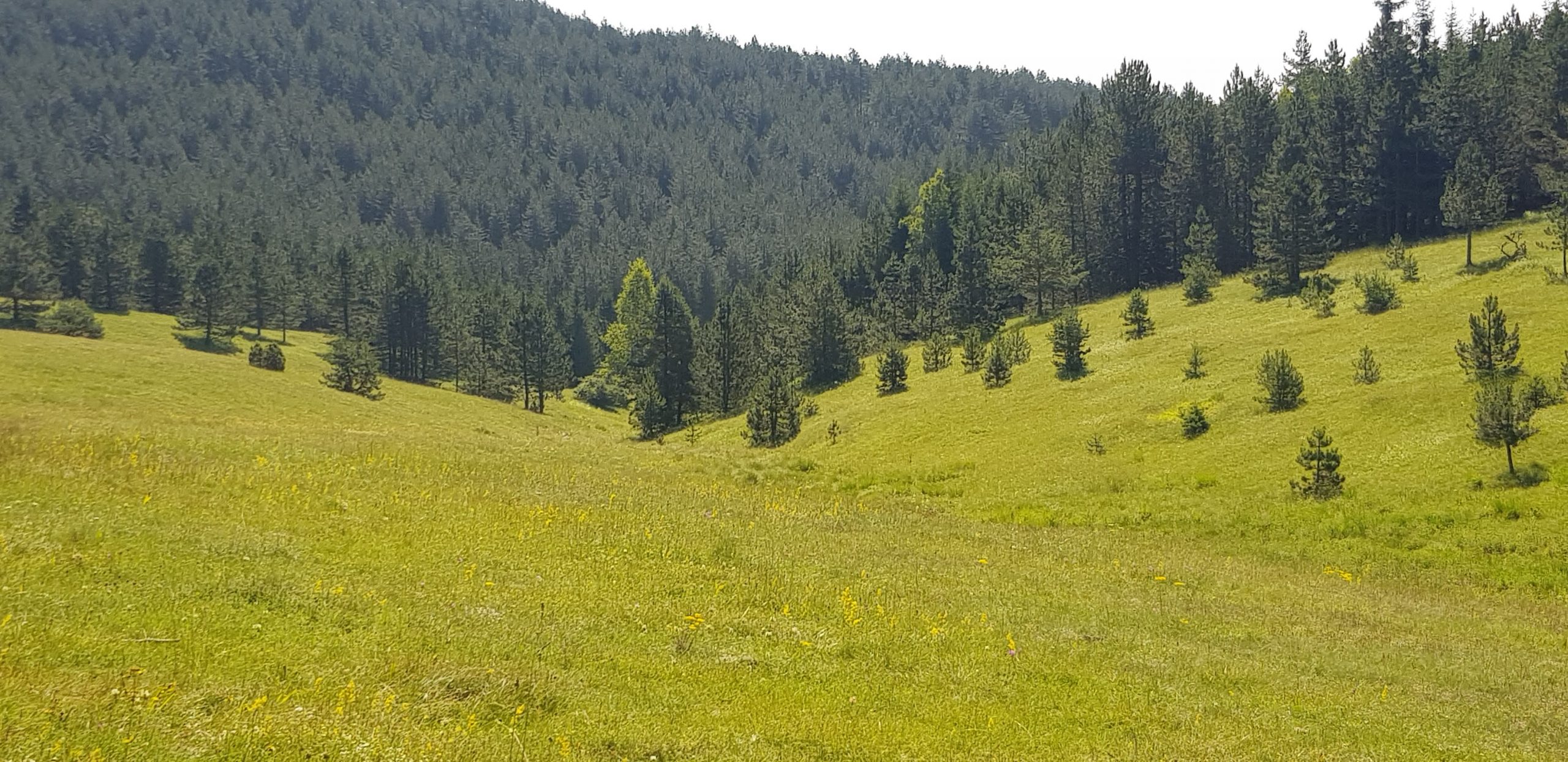
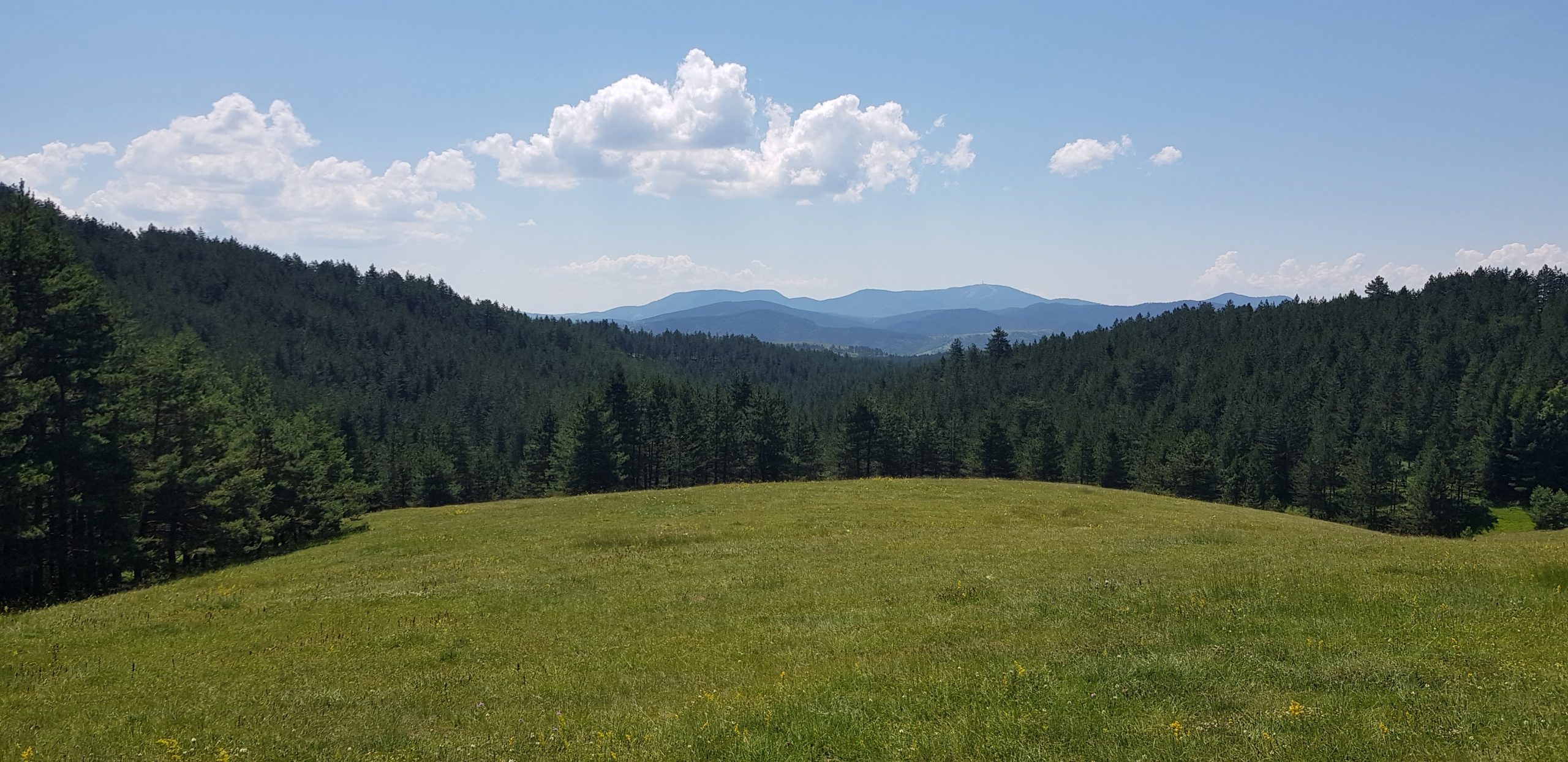
Not wanting to stop on this day when every footstep was valuable, I forewent taking photos and, walking, ascended the slope on the other side. Here the way turned off the vehicle track and up across meadows over high plateaus. This was what I had been running towards.
Up, out into the open, up high, through a meadow dotted with the pines that gave Zlatibor its name (zlati = golden, bor = pine).
Along the ridge, down through a coppice, then left and down, then right. Quick leaping steps touching lightly on clumps of mud and grass to cross the bog, and then up the meadowed slope on the other side.
My feet stopped, and suddenly I knew why I was here. Why I was running this route today. Moving ever onwards, just keeping going. To here.
I stood and my soul listened. In the silence that carried only the soughing of the wind in the pines and the shirr-shirring of the grasshoppers, it opened, spread, out over the meadow, over the forested mountain ranges, weightless, at peace.
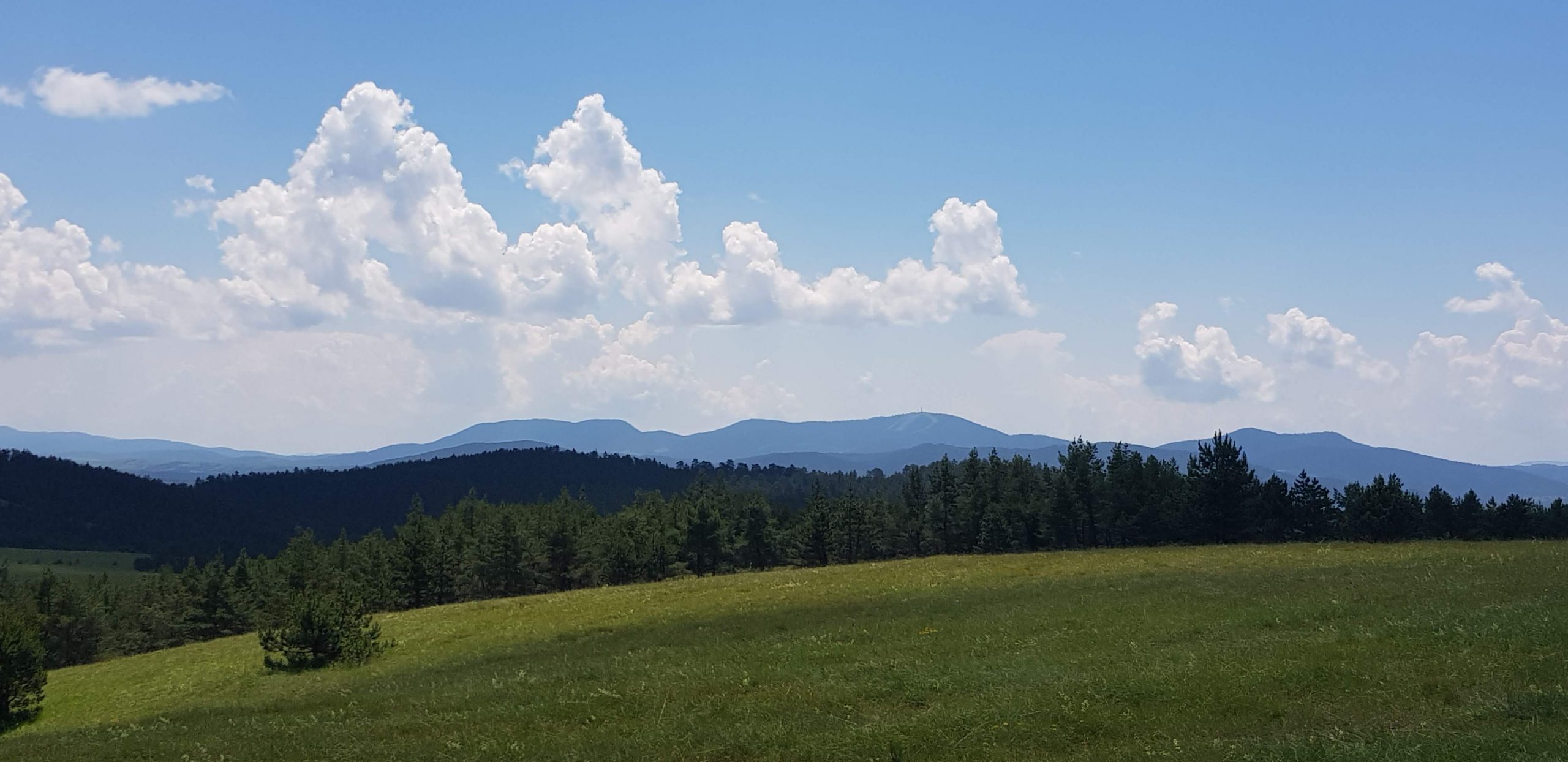
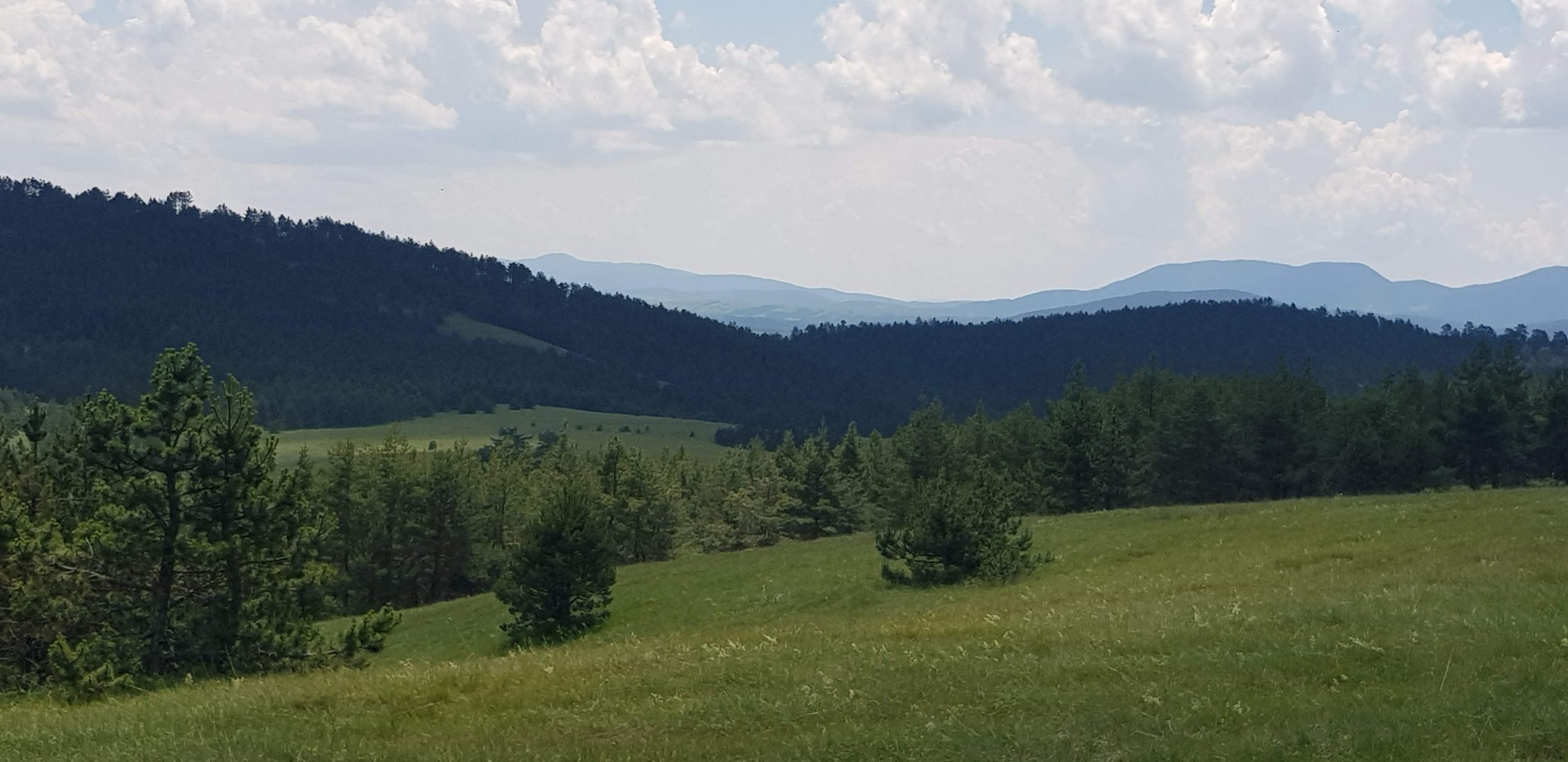
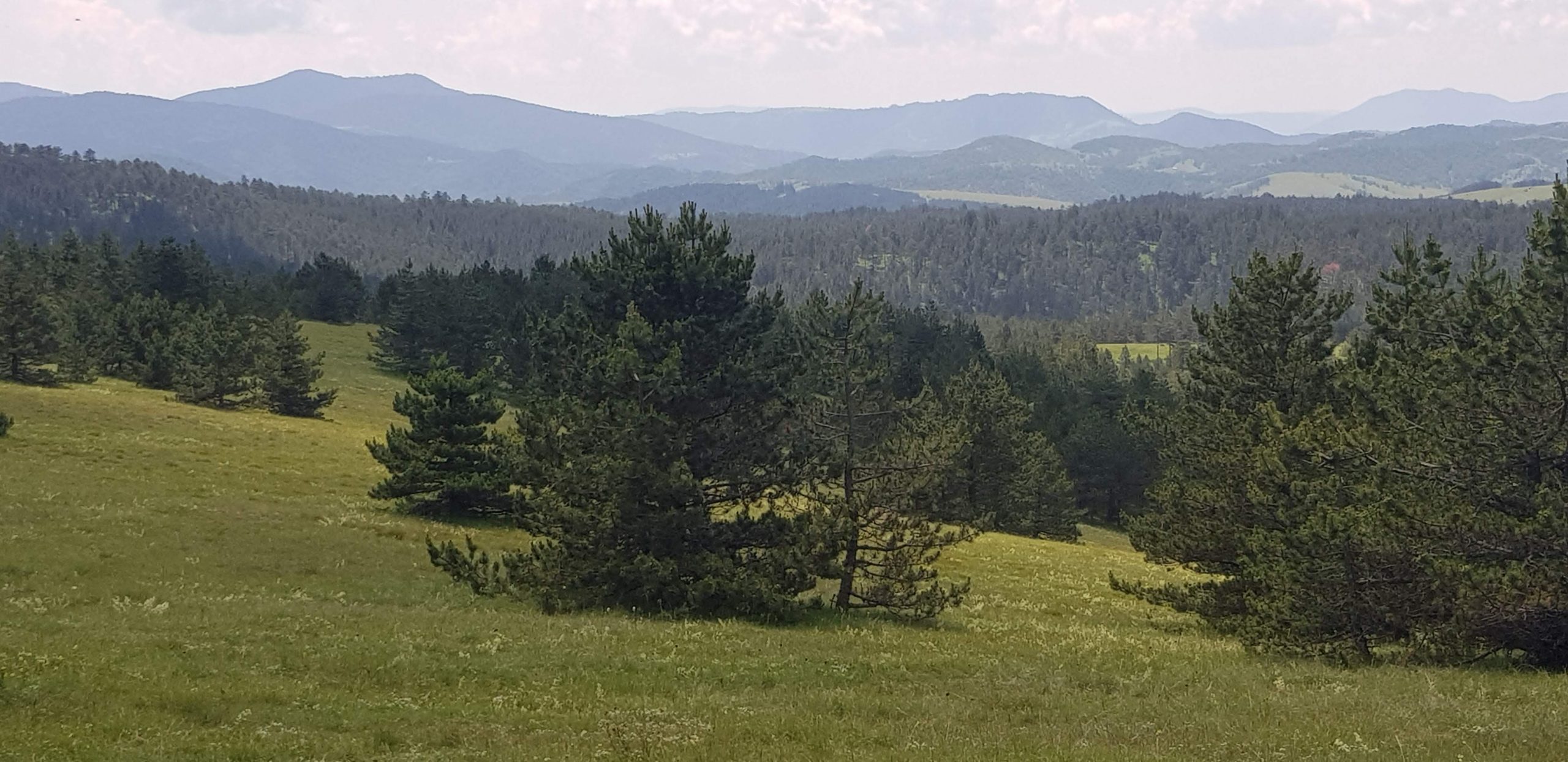
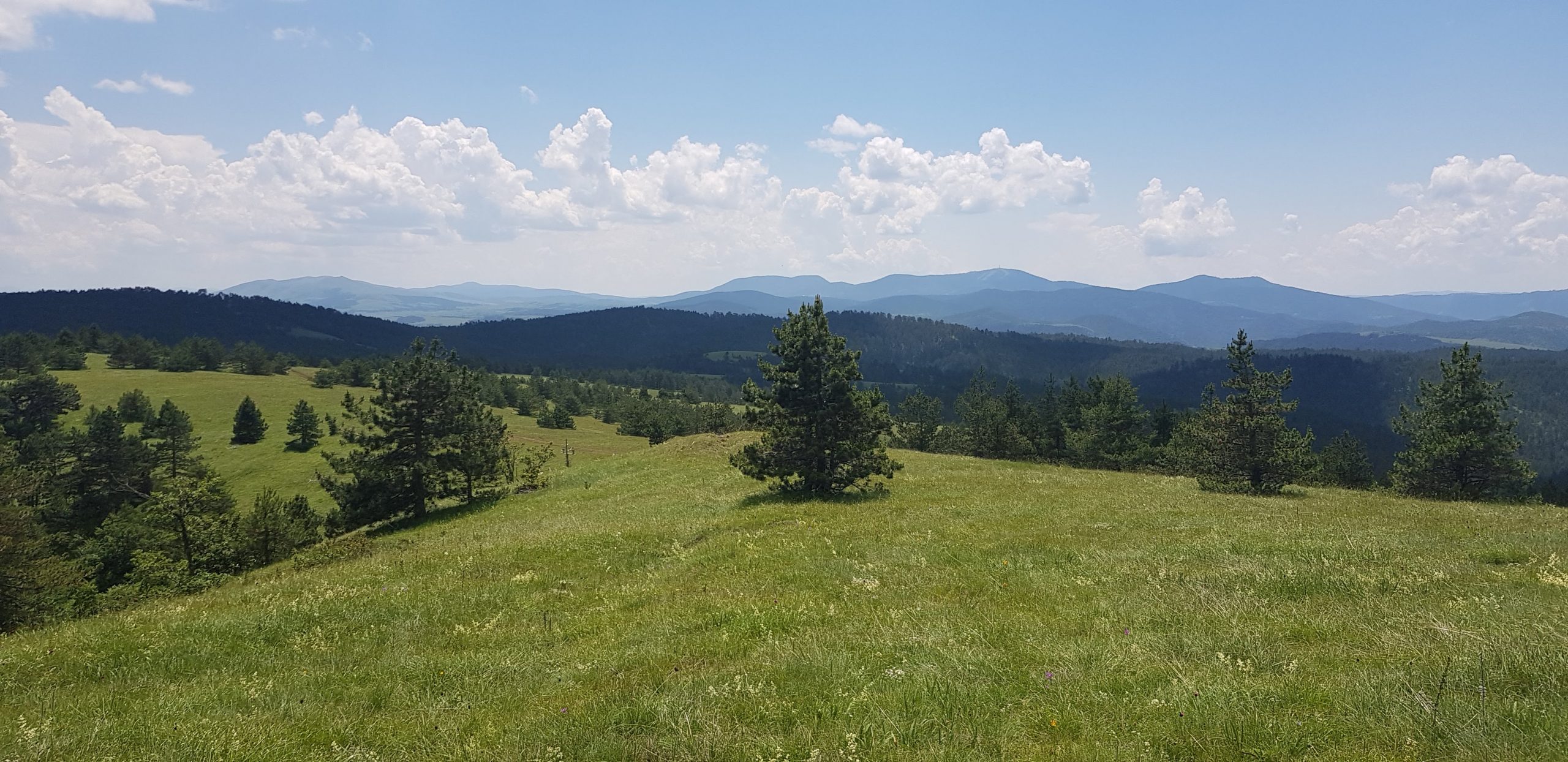
After some minutes, smiling, softened, calmer, I continued, my feet carrying me across the meadow and down through the forest on the other side back to the vehicle track, then back along and down to the three cottages strung in a row.
As I neared the furthest one, I saw the gospođa in the garden. Looking up at the sound of my footsteps, she started and called out to me loudly.
I don’t like to stop when I’m running (or hiking, for that matter). I’ve become accustomed to attracting attention and comments, a woman running alone, in this part of the world, and I typically smile and wave and nod and keep on moving. Especially since most of the time I don’t understand what they’re saying anyway, although it seems always to be encouraging and approving. This time, though, my body seized the excuse to stop and I went up the fence, calling out, “Ne razumem” (I don’t understand). The gospođa came over to me, repeating what she’d said.
I guessed that she was remarking upon my running and asking where I’d been, so I turned and described a large circle in the air with my hand, outlining the route I’d taken. She nodded thoughtfully. Then, looking at me piercingly, she said something else, the last word of which arrested my attention. Kafa. Coffee. Without thinking, I said, “Da!” (Yes!) She seemed a bit taken aback, but looked at me again and repeated, something something something kafa. “Da da da!” I exclaimed, grinning and nodding vigorously.
She bustled over to the house, called out to the inhabitants inside that she’d invited a stranger in for coffee (I inferred), and then went to the side gate and waved me over. I opened the gate and stepped into the garden, carefully closing the gate behind me.
Brandishing a large stick in one hand to keep the dog at bay, with the other she motioned me to the porch and then indicated that I should sit down. I sat. The gospođa had disappeared into the cottage, but she soon reappeared carrying a glass and a plastic container of water. Placing the glass on the table beside me, she filled it with water and then disappeared again. I drank. I actually still had 750 ml of water in soft flasks in my running vest, but a drink of water is the fundamental gesture of hospitality, especially the closer you get to the equator. At lower altitudes than Zlatibor’s thousand metres, it was already full summer in Serbia, hot and humid.
I leant back in the chair but quickly sat upright again. The two full soft flasks were stashed in the back of the vest, along with the food I hadn’t eaten, and I didn’t want to squish them. Nor did I want to pull out the flasks of water, because that would have made a mockery of her first hospitality. So for the next half hour I sat upright, smiling and looking (I hoped) relaxed.
A thin and frail-looking gospodin with twinkling eyes emerged from the cottage and stopped, looking at me somewhat bemusedly. “Dobar dan,” I said politely. “Dobar dan,” he said, and then smiled warmly and extended his hand. Coronavirus. Don’t shake hands, my mind chattered as I automatically took his hand and we shook.
After we’d thus introduced ourselves (without exchanging names), he went back inside and the gospođa came out bearing a dish piled with some sort of homemade starchy treat. “Toplo” (warm), she said as she placed it on the table beside me. “Hvala vama!” I said, nodding and grinning my appreciation. As she went back inside, I picked up one of the treats and took a bite. It seemed to be a lightly fried puffy dough ball, slightly flattened. The first taste was faintly of sweetcorn, so I inspected the inside of it, but saw no evidence of any ingredient but dough. Finishing that one, I followed it with a sip of water and then picked up another and enjoyed it too.
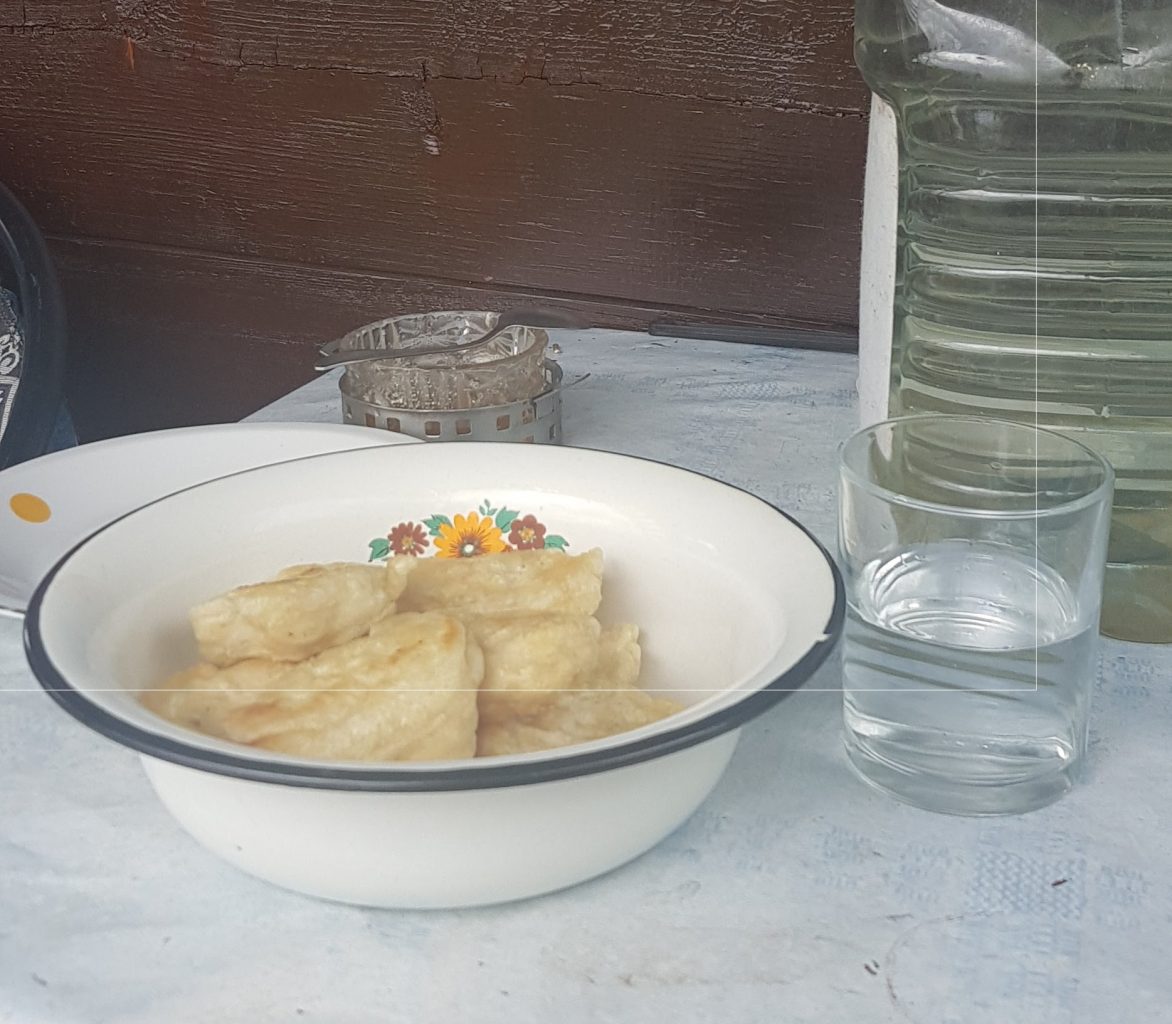
While I was chewing that I saw the gospođa cutting up a slab of watermelon. Just as I’d polished off a second of the fried puffy dough balls she came out carrying a plate piled high with chunks of fresh watermelon, which she placed on the table beside me along with a small fork, followed in short order by two burstingly ripe peaches. Again I expressed my appreciation. As she bustled away, I picked up the fork and speared a piece. Fresh, cool, juicy, light — it was delicious.
Popping another chunk of watermelon in my mouth, I surveyed my surroundings. The garden was verdant, fecund. Behind and beside me, trailing vines and roses clambered up the porch railings. In front of me, the earth beside the wooden steps that led to the sleeping loft overflowed with blossoms in lavender, lilac, yellow, pink and rose. (Regretfully, thanks to the paucity of my knowledge of flora, I can’t identify any of the plants, but you can see them in the photos below.)
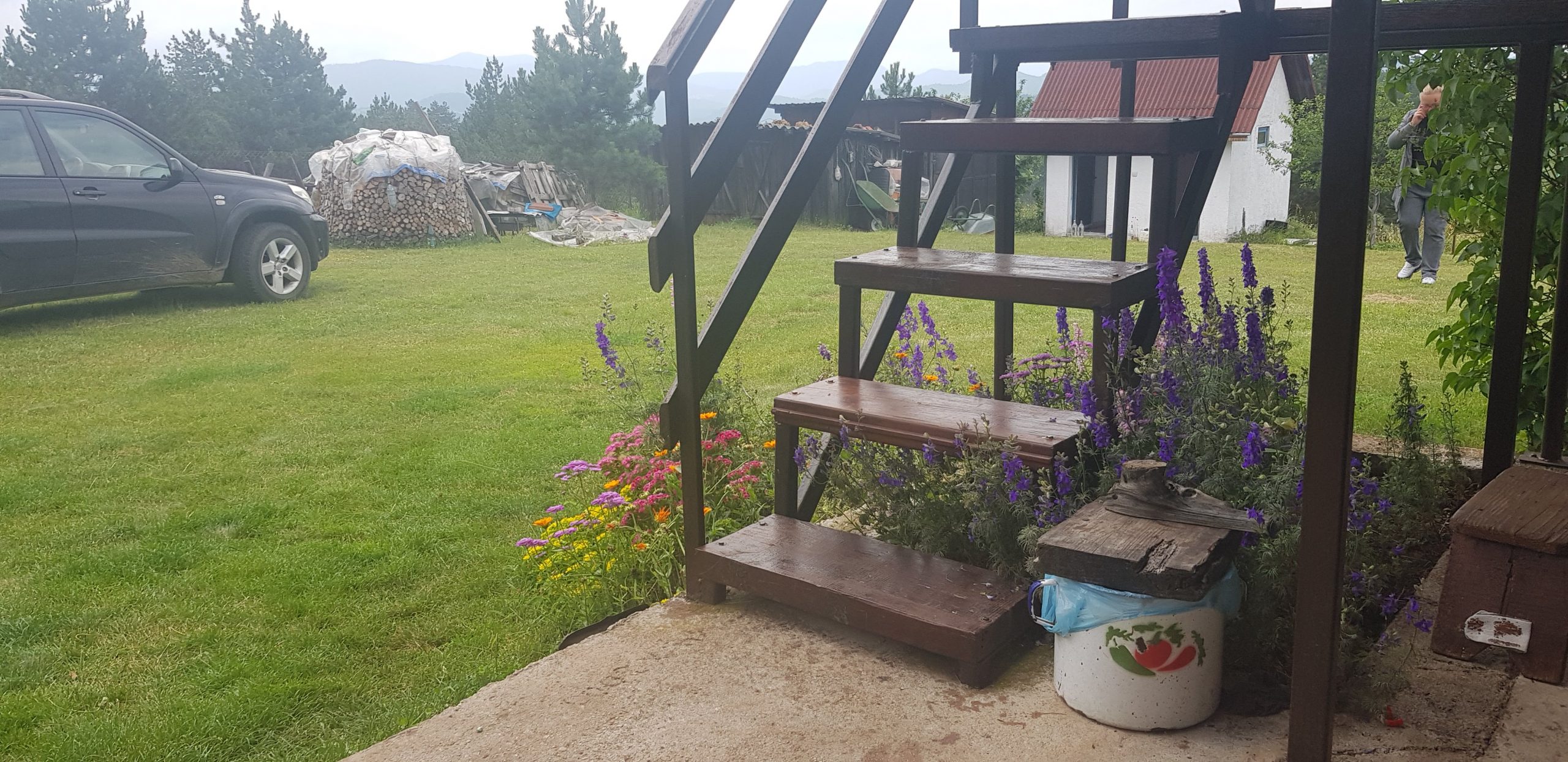
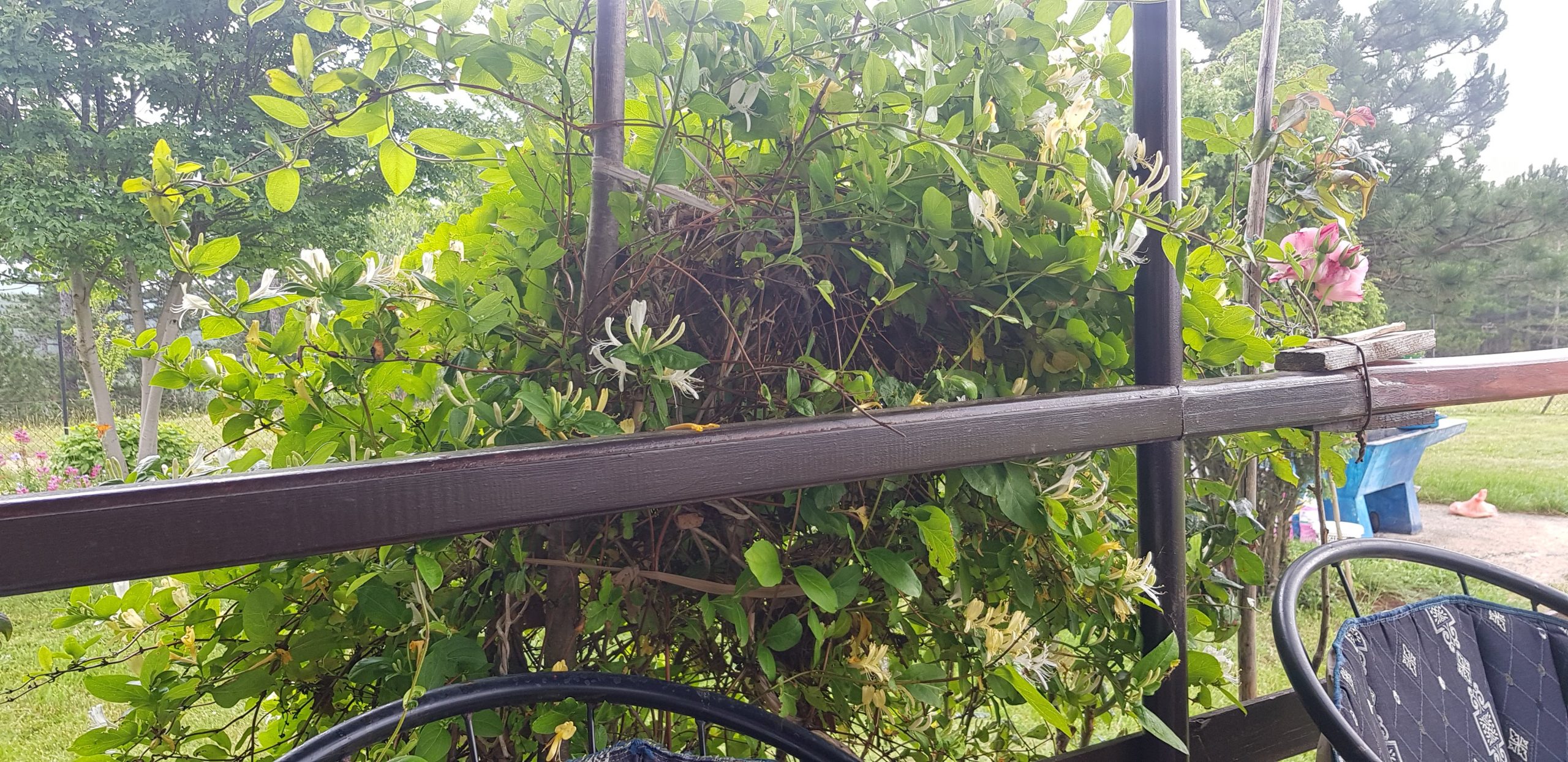
Suddenly there was a loud buzz beside my ear. Instinctively I leaned away and then turned my head to see a giant bumblebee crawling into a flower. Butterflies fluttered around the bushes.
Along with the sleeping loft above, the cottage had two rooms downstairs, a kitchen-seating area at the front and a sleeping room at the back. Across the lawn by the back fence was a small, well-constructed whitewashed building divided in two, with a door in each side. I guessed this to be the outhouse and perhaps shower room or washroom. One of the doors was open and the interior looked very clean.
In the middle of the garden, a short distance from the porch, sat a large blue tub with a single tap. This seemed to be the only source of running water for kitchen purposes. During the whole time I sat on the porch relaxing and being plied with food and drink, the gospođa was in continuous movement back and forth from the cottage to the tub, bringing dishes out, washing them, and then taking the clean dishes inside — to re-emerge with another load of dishes to wash. Every dish and utensil she used in preparing food for me got washed immediately. I had at first thought she would sit with me and we would enjoy kafa together, but her household work occupied her without cessation.
Returning my attention to the watermelon, I speared another juicy chunk and had just started enjoying it when the gospodin re-emerged and sat in the chair at the other side of the table. We smiled at each other. Gesturing at the watermelon, he urged me to have more, so I did.
Both impelled by the desire to connect, for the next quarter hour or so we exchanged bits of conversation, the tiny amount that was made possible by my extremely limited — but at least fairly useful — knowledge of Serbian. The gospodin was kindly and light in spirit. He learnt that I was from New Zealand and I was a writer. I learnt that they had had this cottage for fifty years but only came here in summer; in winter it was too cold and the snow too high. When our conversation ran out, we sat smiling at each other or gazing at the garden in slightly awkward silence. And I ate.
By this point I had been wondering for some time if I had misunderstood the gospođa when I thought she’d asked me if I’d like coffee. The whole half hour or so that I’d been here, there’d been no indication, either in sight, sound or aroma, of coffee preparation. I was considering seriously if I really had misunderstood her and had enjoyed their hospitality all this time under false pretences and outstayed my welcome and so should politely take my leave, when the gospođa turned from the latest load of dishes at the tub holding a coffee beaker. Coffee! I thought elatedly as she came up the porch steps and I saw that the beaker was filled with water.
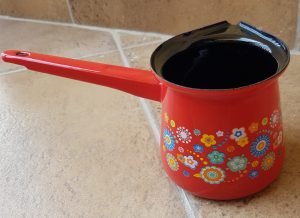
Pausing beside me, she looked at me pointedly and said, “Kafa?”
“Da!” I replied, nodding enthusiastically. “Kafa!”
“Kafa?”
“Da!”
Seemingly satisfied that I did, in fact, actually want coffee, she carried the beaker inside and promptly came out again. That wasn’t enough time to have lit a flame under the beaker, I thought with concern. The gospođa walked across the lawn and disappeared behind the woodstack, reappearing a few moments later carrying a largish piece of kindling, which she took into the cottage. I listened anxiously. Soon I heard the burst of fire flaming up and I relaxed, smiling inwardly. Coffee was being prepared.
A few minutes later the gospođa came out from the cottage carrying a teacup filled to the brim with steaming dark liquid.
“Hvala puno!” I exclaimed as she placed the cup on the table beside me. She smiled faintly.
I picked up the cup and took a sip. Ahhhhh. The coffee was piping hot, thick and strong. Outstanding. In quick succession I took several more sips, and then reluctantly put the cup down, not wanting to seem greedy or uncouth.
“Još?” the gospodin said, gesturing at the half empty cup.
“Ne, hvala”, I replied, laughing.
We ‘chatted’ a little more as I finished the coffee. I had eaten all the watermelon, one of the two ripe peaches, and several of the fried puffy dough balls. With the coffee, I was replete — and wondering if I would actually be able to run with such a full belly!
I put the empty cup down, and after a decent interval of a minute or so, I stood up, indicating by that action that now I would leave. However, not quite yet.
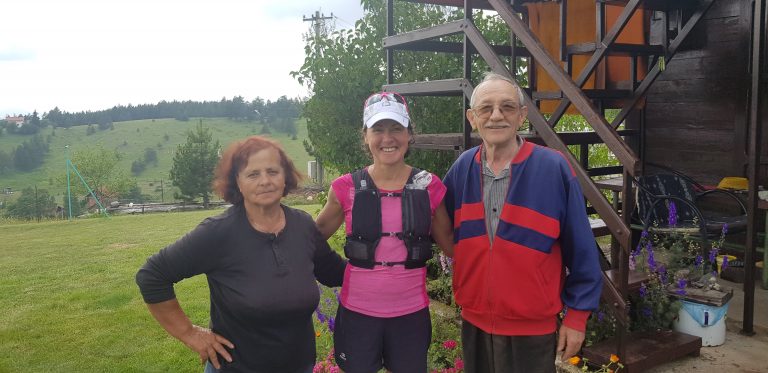
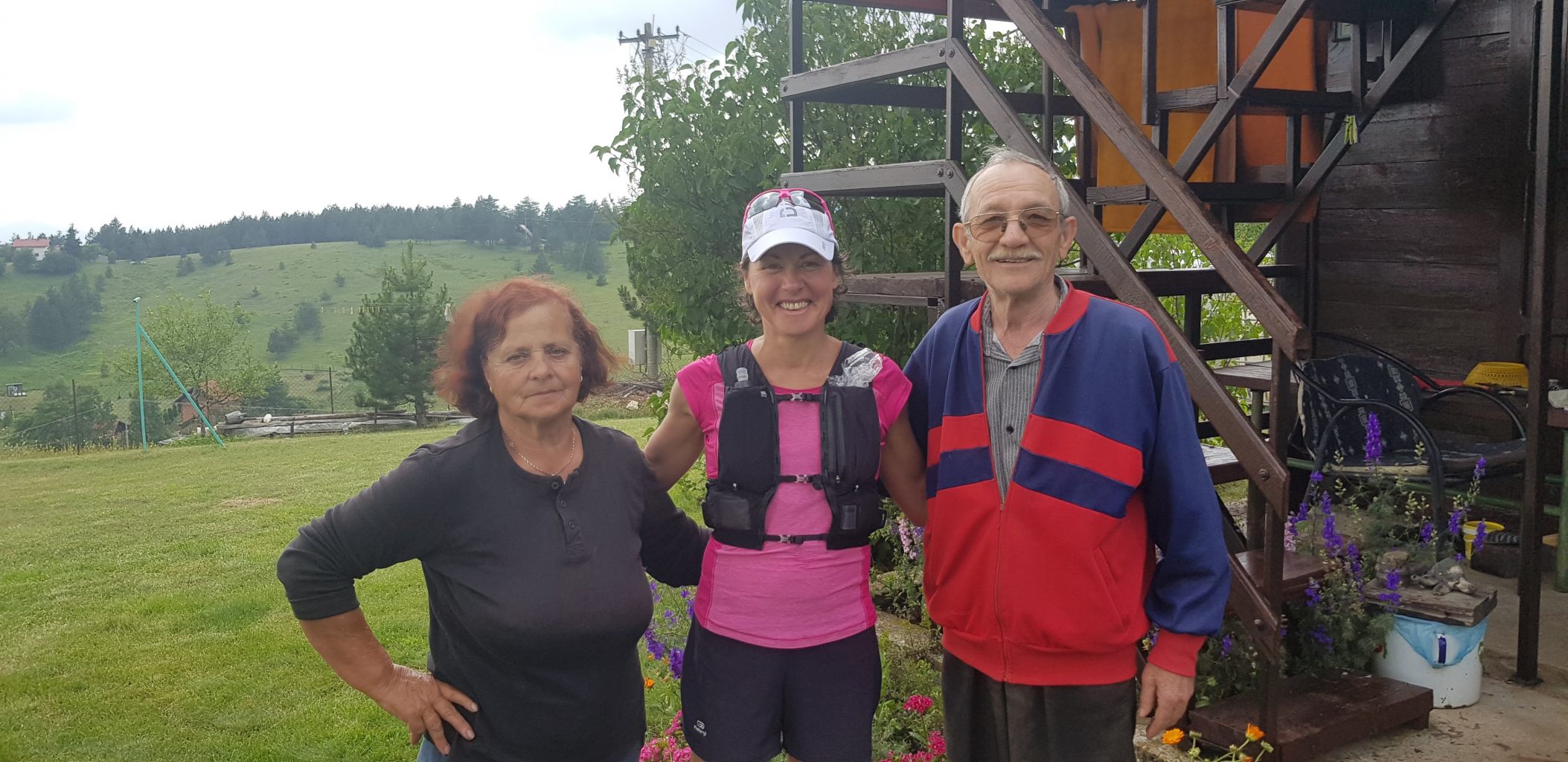
At my rising, the gospodin had risen also. I looked at him. “Slika?” I said, and swept my arm in a large arc to encompass him, the gospođa and me.
His face lit up. “Da!” he said and went into the cottage to tell his wife I’d like to take a photo with them.
He and I stood on the porch and waited. Through the open doorway, I saw the gospođa combing her hair in front of a small square of mirrored glass hanging on the wall beside the stove. Soon she came out, followed by their adult daughter to whom I handed my phone, the camera ready.
The three of us arranged ourselves in the garden with the hills in the background.
Photo taken, we moved towards the gate. As we reached the tub, they stopped and the gospođa grasped my arm. I stopped.
“Kako se zoveš?” — What is your name? — she said.
I told them my name, and then we clasped hands. As we called out repeated thank yous (me) and goodbyes (all of us), I walked towards the gate.
“Drugi put! Srečan put!”
I closed the gate behind me, we exchanged a last smile and wave, and then, fully fueled and caffeinated, I lifted my feet one after another into the rhythm of running the 7 km back to the car.
Translations and explanations
gospođa (GOS-poh-dja): There is no exact equivalent of this in English. In Italian it would be signora. The word literally translated means Mrs, but it is used as a polite term to refer to any woman, both directly (speaking to her) and indirectly (speaking to others about her).
gospodin (GOS-poh-din): The male equivalent of gospođa.
dobar dan (DOH-bar dahn): hello (literally ‘good day’). The default, all-purpose greeting.
hvala: thanks
hvala vam(a): thank you
hvala puno: thank you very much
još (yosh): another, more
Drugi put! Srečan put! (DRUH-gi puht; SREH-chan puht): Another time! Have a good trip! (srečan put is literally ‘happy road’, ‘lucky road’)
Scusi, potrei chiederla un grande piacere? Potrei chiederla un goccio di caffè? / Per caso, potrebbe darmi un goccio di caffè?: Excuse me, could I ask you a great pleasure/favour? Could I ask you for a drop of coffee? / Could you, by chance, give me a drop of coffee?
Zlatibor – Golden Pine mountain: A particular type of a pine originates from the mountain, whose Latin name is Pinus silvestris variegata zlatiborica. Today it is endangered.
How coffee is traditionally prepared in the southern Balkans: https://www.restoranibeograd.com/en/news/serbian-black-coffee-here-is-what-you-need-to-know-before-you-order-this-drink/
Note to readers: If you know what the fried puffy dough balls are called, please tell us all in a comment! Hvala!!
Hi!
Very nice story indeed!
I think the deep fried puffy dough balls are “krofne”.
Hvala! Thank you! I’ve encountered krofne as a kind of filled doughnut, but these were very different from that. I should ask my Serbian friends what they’re called. Duh.
Emil, can I ask you how you came across my blog? I’ve done no promotion of it and it’s ages since I last posted, so I’m really interested to know how it’s showing up in internet-land.